Energy Efficient Air Compressors: How Variable Speed Drive (VSD) Technology Cuts Costs
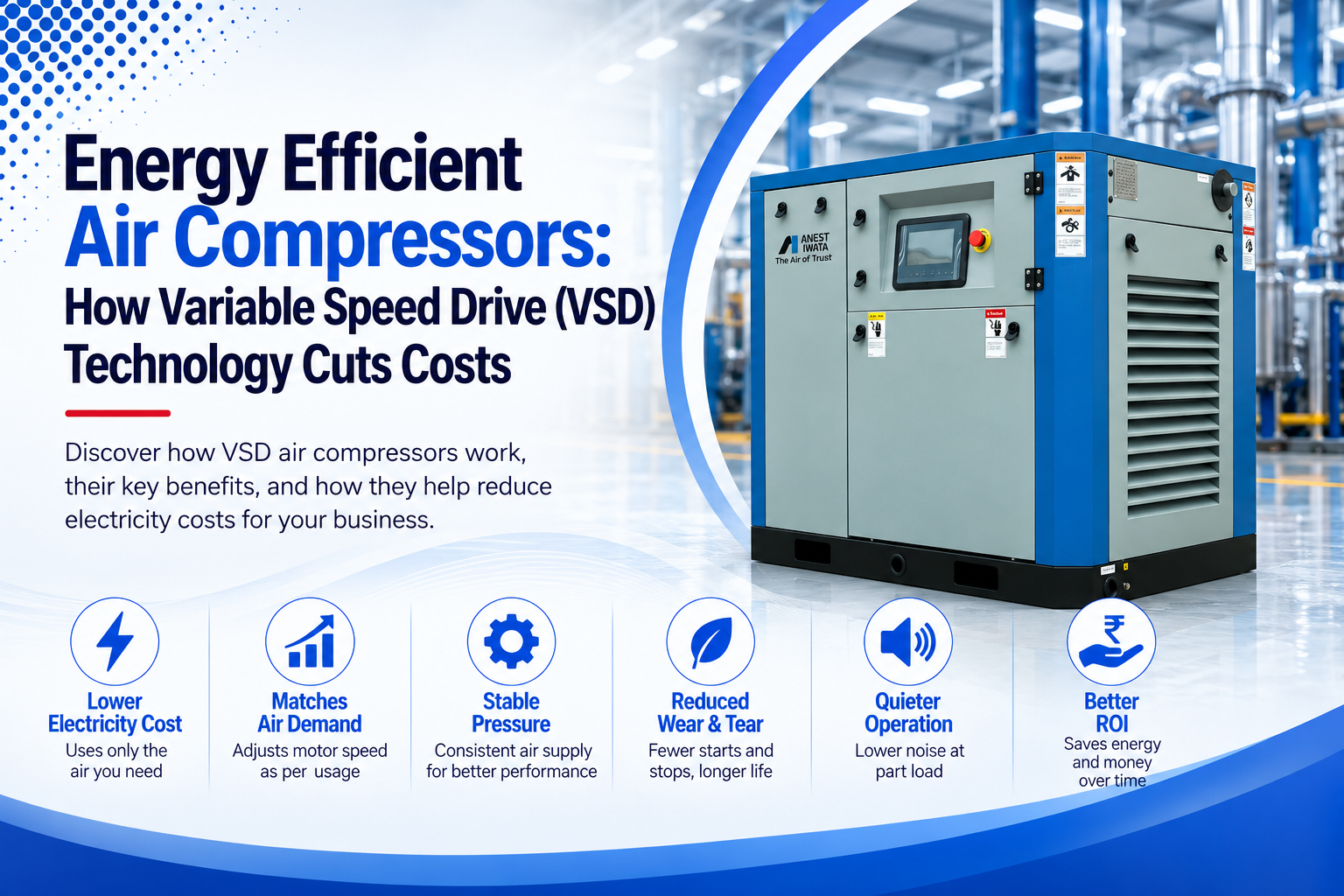
Quick answer: A VSD air compressor changes its motor speed to match the amount of air your plant is using, instead of running at full speed and then idling. For sites where air demand rises and falls through the day, this can reduce wasted energy and lower the electricity used by the compressor. The benefit depends on how much your demand varies.
Electricity is usually the largest part of what a compressor consumes over its life, which is why energy use deserves as much attention as the purchase itself. If your plant’s air demand changes between shifts, between machines or across the week, an energy efficient air compressor with variable speed control may suit you. This guide explains how the technology works, the practical variable speed drive compressor benefits, and how to decide if it is right for your site.
Why Does a Fixed Speed Compressor Waste Energy?
A traditional fixed speed compressor has a motor that runs at one speed. When the plant needs less air than the compressor can produce, the machine has two ways to cope.
- Load and unload. The compressor keeps running but stops compressing air, which is called idling. The motor still draws power while producing no air.
- Stop and start. In smaller machines, the motor switches off when the tank is full and starts again when pressure drops.
Both approaches waste energy in some way. Idling uses power with no useful output, and frequent starting puts stress on the motor. The less steady your demand, the more of this waste occurs.
What Is a VSD Air Compressor?
VSD stands for variable speed drive. In a VSD air compressor, an electronic controller adjusts the speed of the motor so that the amount of air produced follows the amount of air being used. When demand is low, the motor slows down. When demand rises, it speeds up.
Think of driving a car. A fixed speed compressor is like accelerating hard and then braking again and again. A VSD compressor is like holding a steady, adjustable speed that follows the traffic. The second approach uses less fuel for the same journey.
What Is a Permanent Magnet Motor Compressor?
Many variable speed models also use a permanent magnet motor. This type of motor uses permanent magnets in its rotor rather than relying only on electrical induction, and it is well suited to running at different speeds efficiently. In a permanent magnet motor compressor, the motor and the compressor element are often matched closely, which supports smooth, controlled operation.
Within the Bimpex screw range, the LRST, APM and EPM series are described as using permanent magnet motors with variable speed control. They cover different power ranges, so the right series depends on your air requirement.
Variable Speed Drive Compressor Benefits
When the demand pattern suits it, a VSD compressor offers several advantages.
- Lower wasted energy. The compressor produces only the air that is used, rather than idling.
- Reduced electricity use. To reduce air compressor electricity cost, matching output to demand is one of the most effective measures available.
- Stable pressure. Close control of motor speed keeps pressure within a narrow band, which helps sensitive equipment.
- Soft starting. The motor ramps up gradually, which reduces electrical stress and sudden current surges.
- Less mechanical stress. Fewer hard starts and stops are easier on the motor and drive components.
- Quieter running at part load. A slower motor generally makes less noise.
When Does VSD Make the Most Sense?
VSD is not automatically the right choice for every plant. It works best where demand varies.
Demand pattern | VSD suitability |
|---|---|
Demand changes a lot between shifts or machines | Strong fit |
Demand varies through the day, with long low use periods | Good fit |
Steady demand close to full capacity all the time | Limited benefit |
Very small, occasional use | Usually unnecessary |
If your compressor already runs at nearly full load for most of the day, a fixed speed machine can be just as efficient, because there is little variation for the drive to follow. The savings come from variation, not from the technology on its own.
How Can You Tell If Your Demand Varies Enough?
You can estimate this with a simple exercise.
- Record the compressor’s loaded and unloaded time across a typical day. A large share of unloaded or idle time suggests wasted energy.
- Check pressure swings. Wide swings between cut in and cut out show frequent cycling.
- List when different machines run. If machines start and stop at different times, your demand is probably uneven.
- Compare weekdays with weekends and shifts. Large differences point towards variable demand.
A supplier can use these figures to estimate whether a VSD machine would suit your site. It is worth asking for that assessment before deciding, since the payback depends on your actual usage and cannot be assumed.
Other Ways to Reduce Air Compressor Electricity Cost
VSD is one tool among several. Whatever compressor you use, these habits improve efficiency.
- Fix air leaks. Leaks can waste a significant share of the air a compressor produces.
- Lower the pressure to what is needed. Higher pressure than necessary makes the compressor work harder.
- Keep filters and coolers clean. Restrictions force the compressor to use more power.
- Size the compressor correctly. An oversized machine spends more time idling.
- Reduce pressure drops in pipework. Poorly sized pipes and fittings waste energy.
- Switch off unused equipment. Shut down compressors when the plant is not running.
- Maintain the machine on schedule. Worn parts reduce efficiency.
What Should You Ask Before Choosing a VSD Compressor?
- What is my demand profile across a typical day and week?
- What is the air requirement at peak and at minimum?
- Which series suits that range?
- What servicing does the machine need, and how is it supported?
- How does the design handle ambient heat and dust in my plant?
Answering these questions with a supplier gives you a realistic view of the benefits instead of a general promise.
Exploring VSD Options at Bimpex
Bimpex’s screw air compressor range includes permanent magnet variable speed models alongside belt drive and direct drive units, so you can compare options for different demand patterns on a single page. If you are unsure which suits your plant, share your air consumption pattern with the team.
Frequently Asked Questions
How does a VSD compressor save energy?
It adjusts the motor speed to match air demand, so it does not run at full speed or idle when less air is needed. This reduces the power wasted during low demand periods.
Is a VSD air compressor always more efficient?
Not always. The benefit is greatest where demand varies. If your compressor already runs at full load most of the time, the saving from variable speed may be small.
What is a permanent magnet motor in a compressor?
It is an electric motor that uses permanent magnets in its rotor. It works efficiently across a range of speeds, which makes it well suited to variable speed compressors.
Can I fit a VSD to my existing compressor?
Some fixed speed machines can be adapted, but compatibility depends on the model and its motor. Speak to a qualified supplier or service engineer before attempting this.
How do I reduce my compressor’s electricity use without buying a new one?
Fix leaks, set the pressure no higher than needed, keep filters and coolers clean, correct pipework restrictions and follow a regular service schedule.
Conclusion
An energy efficient air compressor is one that matches its output to your real demand. VSD technology and permanent magnet motors do this well when demand varies, but they are not essential for every site. Measure your demand pattern, fix the basics such as leaks and pressure settings, and then decide whether variable speed suits your plant. To discuss options, you can enquire with the Bimpex team.