
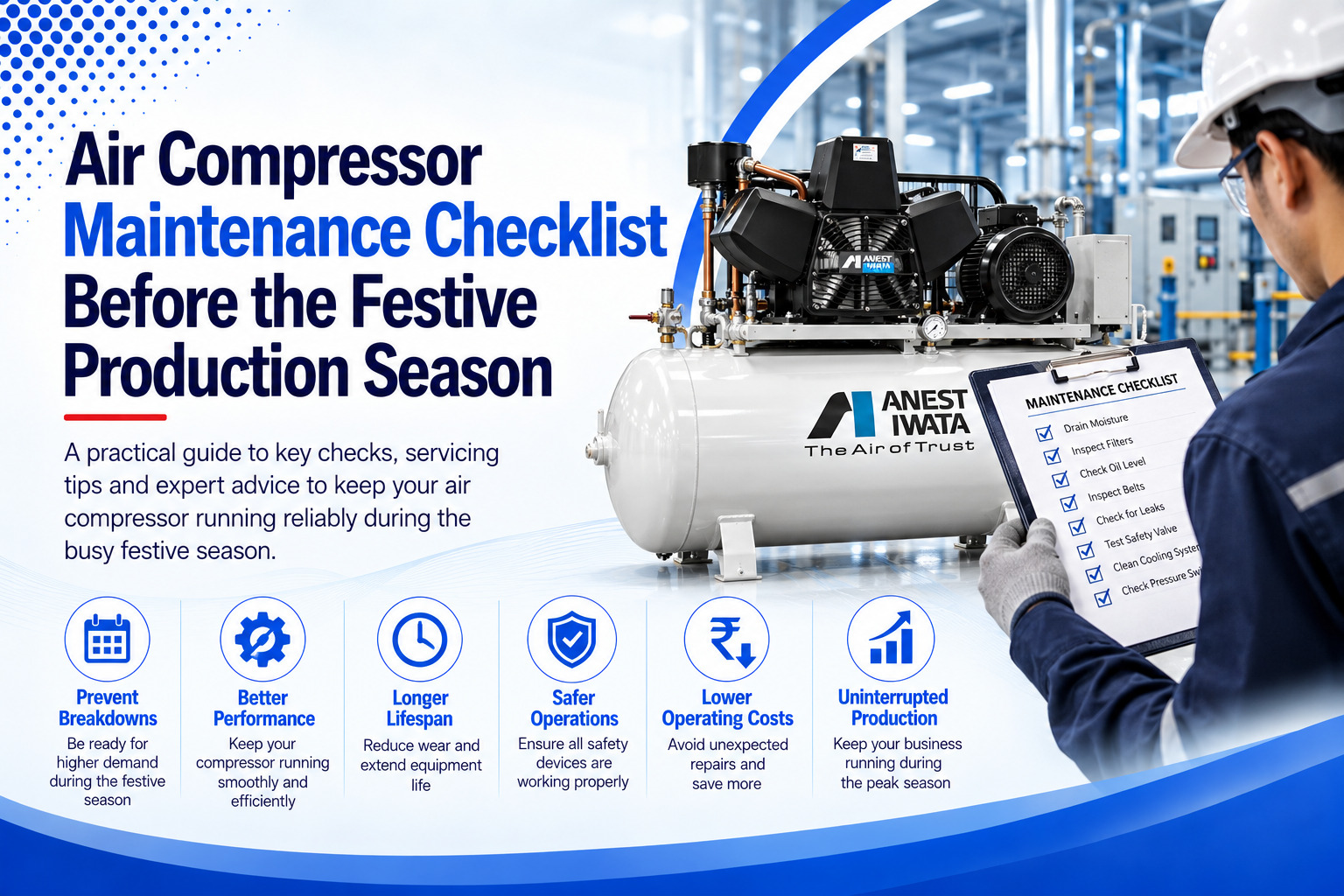
Air Compressor Maintenance Checklist Before the Festive Production Season
Quick answer: Before a busy festive season, use an air compressor maintenance checklist that covers six areas: draining moisture, inspecting filters, checking oil and belts, looking for leaks, testing safety devices and recording running conditions. Completing these checks a few weeks ahead gives you time to fix small faults before they become breakdowns.
For many factories, the weeks before the festive season are the busiest of the year. Orders rise, shifts get longer and the compressor runs harder than usual. A compressor that has run quietly for months can fail at exactly the wrong moment, and a stopped compressor often means a stopped line. Planned upkeep is the simplest way to avoid that. This guide gives you a practical checklist, clear air compressor servicing tips and an explanation of how an annual maintenance contract can support your plan.
Why Is Preventive Maintenance for an Air Compressor So Important Before a Peak Season?
A preventive maintenance air compressor routine means carrying out checks and servicing on a schedule, rather than waiting for a fault. Before a peak season it matters even more, for three reasons.
- Demand is higher. Longer running hours expose any weakness in filters, belts, valves or cooling.
- Downtime is harder to absorb. A breakdown during a rush delays deliveries and disrupts staff plans.
- Small faults grow quickly. A minor leak or a clogged filter makes the compressor work harder, which accelerates wear.
Carrying out air compressor breakdown prevention work two to four weeks before the rush leaves time to order any parts you need and to fit them without pressure.
The Pre Festive Air Compressor Maintenance Checklist
Always follow the manufacturer’s manual for your specific model, and switch off and depressurise the compressor before touching any internal part. Use the checklist below as a general guide.
Daily checks
- Drain the moisture. Water collects in the receiver tank. Drain it at least once a day, or confirm that the automatic drain is working.
- Check the oil level. On oil lubricated compressors, make sure the level sits in the correct range.
- Listen and look. Note any new noise, vibration, smell or unusual heat.
- Read the gauges. Check that the pressure reaches its normal level and holds steady.
Weekly checks
- Inspect the air intake filter. A blocked filter restricts airflow and forces the compressor to work harder.
- Check belts, where fitted. Look for cracks, fraying and correct tension.
- Clean cooling surfaces. Dust on the cooler or on the motor fins traps heat.
- Check for air leaks. Listen for hissing near joints, hoses and couplings.
Monthly checks
- Test the safety valve. It should operate when needed and not stick.
- Check the pressure switch. Confirm that the compressor cuts in and out at the correct pressure.
- Inspect hoses and fittings. Replace any that are cracked or worn.
- Review the air filters downstream. Moisture and oil filters lose effectiveness over time.
Before the festive season
- Replace consumables due soon. Change oil, oil filters and air filters if they are close to their service interval, rather than waiting.
- Check the cooling system. Make sure fans and coolers are clean and working.
- Inspect the valves and the compressor block. Look for signs of wear or oil leakage.
- Record your readings. Note pressure, temperature and running hours so that you can compare later.
- Keep critical spares on hand. Filters, belts and drain parts are the items most often needed in a hurry.
Air Compressor Servicing Tips That Prevent Unexpected Stoppages
These habits make routine upkeep more effective.
- Keep a logbook. A simple record of dates, hours and parts replaced helps you spot patterns.
- Follow service intervals by running hours. Calendar dates alone do not reflect how hard the compressor has worked.
- Use correct oil and genuine parts. Mixing oil types or fitting poor quality parts can shorten component life.
- Keep the compressor room clean and ventilated. A hot, dusty room is hard on any machine.
- Train operators to report early. A change in sound or pressure is often the first warning.
- Never ignore small leaks. Leaks waste energy and make the compressor run longer than it should.
What Is an Industrial Air Compressor AMC?
An AMC, or annual maintenance contract, is an agreement under which a service provider carries out scheduled visits and inspections for a fixed period, usually a year. For an industrial air compressor, AMC arrangements commonly cover regular servicing visits, inspection of key components and a point of contact when a fault occurs.
The exact scope varies between providers, so it helps to ask a few questions before agreeing to one.
- Which visits and checks are included, and how often do they take place?
- Are consumables and spare parts included, or supplied separately?
- How quickly does the provider respond if a breakdown occurs?
- Does the contract cover every compressor on your site, including dryers and filters?
- What records or service reports will you receive after each visit?
Getting the scope in writing avoids misunderstandings and makes it easier to compare options fairly.
When Should You Call a Service Engineer Instead of Handling It In House?
Operators can handle daily and weekly checks. Some jobs, however, are better left to a trained service engineer, especially during a peak period.
- Repeated overheating or tripping of the motor
- Pressure that does not build or does not hold
- Unusual knocking, grinding or squealing sounds
- Noticeable oil in the air line or heavy oil use
- Any work that involves opening the compressor block or electrical panel
Calling for help early means less downtime than continuing to run a machine that is clearly unwell.
Where Can You Get Support for Servicing and Spares?
Planning is easier when your compressor supplier also handles service and parts. Bimpex offers air compressor servicing and support alongside its range of compressors and spares, so your maintenance plan, parts and technical queries can be handled through one point of contact.
Frequently Asked Questions
How often should an industrial air compressor be serviced?
It depends on the model and how many hours it runs. Most manufacturers give service intervals in running hours, and heavier use or a dusty environment means more frequent attention. Your manual is the best guide.
What is the most common cause of air compressor breakdowns?
Neglected basics are behind many failures: blocked filters, undrained moisture, low or dirty oil, worn belts and poor ventilation. A regular checklist addresses most of these.
Is an AMC worth having for an air compressor?
For sites that depend on compressed air all day, a well defined AMC provides scheduled inspections and a clear point of contact for faults. Check what it includes before you decide.
How early should I service my compressor before the festive season?
Aim for two to four weeks before the rush. This leaves time to order parts, fix problems and run the machine for a few days to confirm everything is stable.
Can I do air compressor maintenance myself?
Basic checks such as draining moisture, inspecting filters and listening for changes can be done by trained staff. Internal repairs and electrical work should be left to a qualified engineer.
Conclusion
A short, well timed maintenance routine is one of the most effective ways to protect production during the festive rush. Work through the daily, weekly and monthly checks, add the pre season tasks, keep a logbook and consider an AMC if your site relies heavily on compressed air. If you would like support with servicing or spare parts, you can enquire with the Bimpex team.