
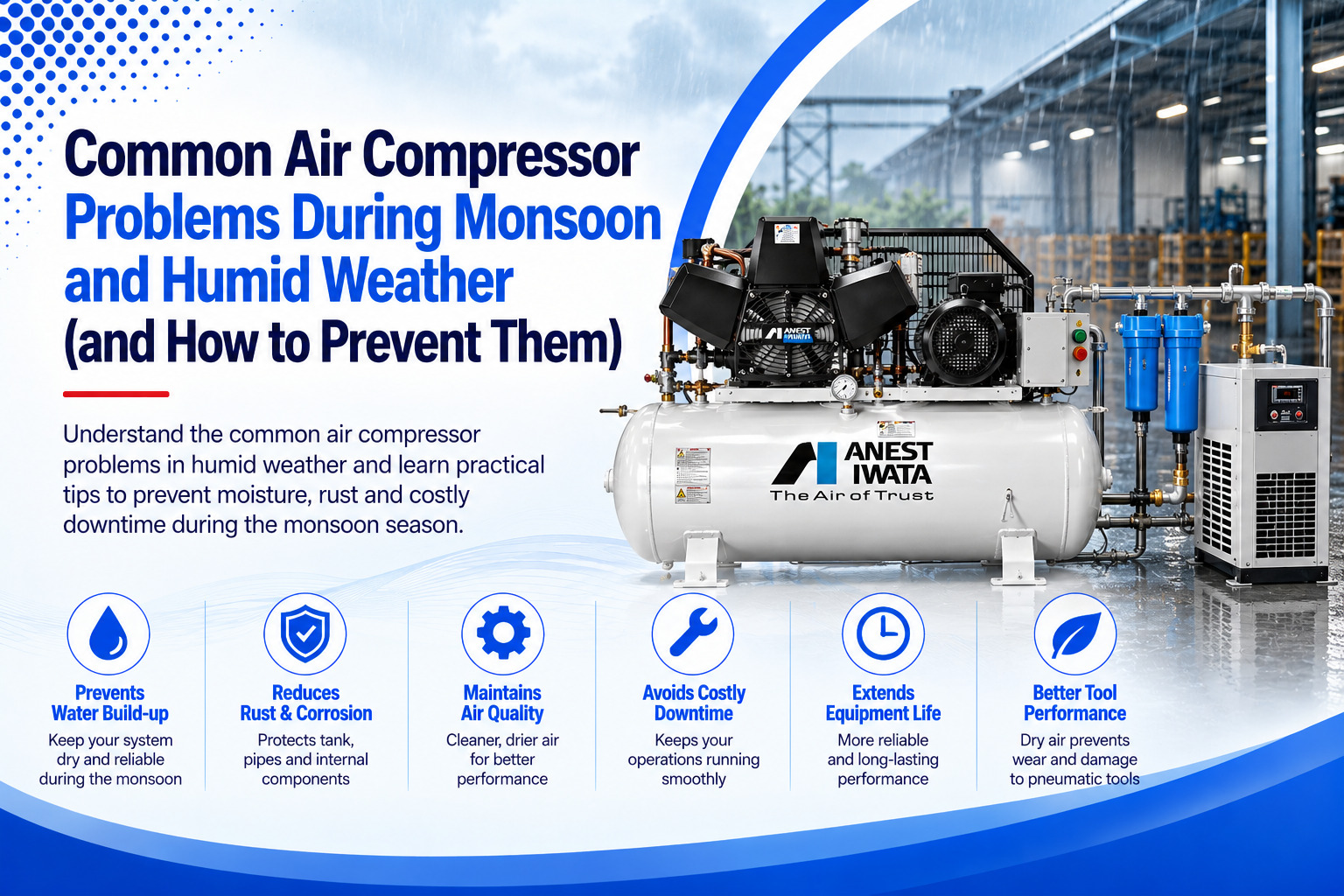
Common Air Compressor Problems During Monsoon and Humid Weather (and How to Prevent Them)
Quick answer: In monsoon and humid weather, air holds more water vapour, so a compressor produces more condensate. The most common problems are water in the receiver tank, moisture in the air lines, rust, blocked drains and damaged tools. Draining the tank regularly, checking the condensate drain, using filters and dryers and keeping the compressor room ventilated prevent most of them.
Anyone who runs a compressor in coastal or monsoon affected India knows that wet weather brings extra work. Pneumatic tools sputter, paint finishes show spots, and pipes and tanks start to rust from the inside. These air compressor problems in humid weather are predictable, which also makes them preventable. This guide explains why humidity causes trouble and sets out a practical way to protect your compressor and your equipment.
Why Does Humidity Cause Problems for Air Compressors?
The air around us always contains some water vapour, and warm air can hold much more than cool air. A compressor takes in this humid air and squeezes it into a much smaller volume. Compression pushes the vapour closer together, and as the hot compressed air cools in the tank and pipes, much of it turns into liquid water, called condensate.
In dry weather, this amount may be small. During the monsoon, when the air is saturated, a compressor can produce a surprising quantity of water each day. If that water is not removed properly, it travels through the system and causes the problems below.
Common Air Compressor Problems in Humid Weather
1. Moisture in the Receiver Tank
Water collects at the bottom of the receiver tank. If it is not drained often enough, the tank fills with water, reducing its storage space and leaving the steel in constant contact with moisture.
2. Moisture in Compressed Air Lines
When water passes beyond the tank, moisture in compressed air reaches pipes, hoses, regulators and tools. It can cause pressure fluctuations, sputtering at the tool and corrosion along the pipework.
3. Rust and Internal Corrosion
Air compressor corrosion humidity problems often start inside, where you cannot see them. Rust forms in the tank, pipes and fittings, and flakes of rust can then travel to tools and valves. A badly corroded tank is also a safety concern and needs professional inspection.
4. Blocked or Failing Condensate Drains
A condensate drain air compressor system, whether manual or automatic, is the main defence against water build up. Dirt and rust can block an automatic drain, so water stays in the tank even though everyone assumes it is being removed.
5. Damaged Pneumatic Tools and Equipment
Water washes lubricant out of air tools, causing wear and failure. Spray painting suffers too, because droplets cause defects in the finish.
6. Emulsified Oil in Lubricated Compressors
In oil lubricated machines, moisture can mix with oil and form a milky emulsion. This reduces lubrication quality and can shorten the life of the compressor block.
7. Electrical and Control Issues
Humidity can affect electrical panels, terminals and pressure switches, particularly if the compressor room is damp or poorly ventilated.
How to Prevent Moisture in Compressed Air
A layered approach works best, because no single measure removes all the water.
- Drain the receiver tank often. In monsoon weather, drain at least once a day, and more frequently in very humid conditions. Do this before the first shift and after the last.
- Check automatic drains. Test them each week to confirm they operate. If a drain is blocked, clean or replace it.
- Use an aftercooler. Cooling compressed air close to the compressor causes much of the water to condense early, where it can be drained.
- Add a dryer where needed. A refrigerant dryer cools the air to remove most of its moisture and suits many general industrial uses. Applications that need very dry air can use desiccant dryers.
- Fit filters. Water separators and coalescing filters remove liquid water and fine droplets before they reach the tools.
- Install pipework with drainage in mind. Slope pipes slightly and fit drain points at low spots. Take branch lines off the top of the main pipe, not the bottom.
- Keep the compressor room ventilated and dry. Stagnant, humid air raises both the moisture load and the temperature.
Air Compressor Rust Prevention: A Simple Routine
Air compressor rust prevention comes down to keeping the inside of the system dry and spotting early damage. Use this routine.
Frequency | Task |
|---|---|
Daily | Drain the receiver tank and check the drain outlet |
Weekly | Test automatic drains and inspect filters and water separators |
Monthly | Check pipework for leaks, damp patches and visible rust |
Every quarter | Inspect the tank exterior, the safety valve and electrical connections |
Yearly | Arrange a professional inspection of the receiver and pressure components |
Always switch off and release the pressure before inspecting or opening any part of the system.
Which Compressors Are Most Affected?
All compressors face the same moisture issues, but the impact depends on usage.
- Small workshop compressors with receivers are often drained irregularly, so rust builds up unnoticed.
- Oil lubricated reciprocating compressors are more affected by emulsified oil if moisture is not controlled.
- Plants using air for painting, packaging or instruments feel moisture problems the most, since quality suffers.
If you have a reciprocating compressor in a humid location, a well maintained drain routine and appropriate filtration are particularly valuable. Bimpex’s reciprocating air compressor range covers a variety of models used in workshops and industry, and the team can advise on the filtration and drying that suits your application.
Warning Signs That Moisture Is Already Causing Damage
- Water spitting from hoses or tools
- Rust coloured water when draining the tank
- A tank that fills with more water than before
- Tools losing power or wearing out early
- Visible rust on pipes, fittings or the tank
- Milky oil in the compressor crankcase
- Frequent pressure fluctuations
If you notice any of these, tighten your maintenance routine and arrange an inspection.
Frequently Asked Questions
Why is there so much water in my compressed air during the monsoon?
Humid air contains more water vapour. When it is compressed and cooled, the vapour turns into liquid. The wetter the air coming in, the more condensate the compressor produces.
How often should I drain the air compressor tank in humid weather?
At least once a day, and more often if the air is very humid. Using an automatic drain helps, but you should still check that it works regularly.
How can I prevent rust in my air receiver tank?
Drain it often, keep the air as dry as possible with an aftercooler, dryer and filters, and arrange periodic professional inspections. Never ignore visible rust on a pressure vessel.
Do I need an air dryer for my compressor?
If your application is sensitive to moisture, such as painting, instrumentation or packaging, a dryer is strongly advisable, especially in humid regions. For lighter workshop use, regular draining and filters may be enough.
Can moisture damage pneumatic tools?
Yes. Water washes away lubrication and causes corrosion, which leads to wear and failure. Keeping air dry extends tool life.
Conclusion
Monsoon humidity is a seasonal challenge, but the damage it causes is not inevitable. Drain the tank daily, test the condensate drains, use filters and dryers where the application demands, and keep the compressor room ventilated. A simple routine, followed consistently, protects your compressor, pipework and tools. For advice on suitable compressors and accessories for humid conditions, you can enquire with the Bimpex team.